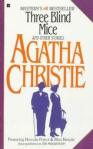

And Then There Were None by Agatha Christie

There Were None To Equal It

(A Book Review of Agatha Christie’s And Then There Were None)

For want of something different other from the traditional fare of Christmas season’s readings during previous year did I venture forth to my first Agatha Christie, And Then Were None, offering a bewildering ride that indeed while away the humdrum of my week-long sabbatical.

The book begins with ten people, complete strangers to one another, who are invited by means of a carefully worded letter by some distant acquaintance in the past or through an unknown business undertaking to an excursion to Indian Island — a location off the coast on the province of Devon that has been the object of newspaper gossip lately.  Each has a strong purpose to comply with the strange request. Each has reasons for desiring a place far away from home.

On the island, the visitors are distressed with the absence of their host and only the servants to greet them upon their arrival. Queer goings on set afoot during the guests’ dinner when a mysterious recording reveals crime they have allegedly committed. It doesn’t take long for each of them to gather that this quiet sojourn is nothing what it seems as each of them are hunted down by a cunning murderer whose pattern for killing is inspired by an innocent nursery rhyme hanging over the fireplace.

Agatha Christie

And Then There Were None proclaims why Agatha Christie is the Queen of Crime Fiction bar none. For one thing the novel displays her ingenuity for plotting; bringing to the table a new approach to one of genre’s hackneyed plot devices: the locked room mystery — or rather the locked island mystery as the novel portrays. As it follows a lot of characters on its initial chapters it may leave the reader a bit confused and pressed hard to keep track of them individually (this is where the character list on the front of book comes in handy) as the narrative shifts from their respective point of view. Taxing though it may be, this in my opinion appropriately reflects the sense of chaos that ensues on the island and as the reader bears witness to increasing suspicions that each characters feel for one another, he too becomes part of the inquiry to hunt down the identity of the murderer, examining each guest through the lens of their minute actions and motivations.

And this is where the fun the part of Christie’s novel begins: just when the reader has it down pat or by the better of his hunches ascertained who the murderer is, she disproves him wrong chapter after baffling chapter. This clever puzzle just leaves and tantalizes the reader as each episode raises the level of suspense and dread down to the novel’s chilling outcome.

While in all honesty the novel doesn’t have a compact plot — that it’s quite implausible that the planned murder is followed through down to the letter of the nursery rhyme and that the victims were too obliging to the killer’s machinations that it appears to me somewhat all too convenient, all too neat — no one can argue that the crime is one brilliant masterstroke. All the red herring and tricks directed by Agatha Christie’s simple prose marked with the complexity of her deception makes it one of the crime novels no else but she can pull off. If you enjoy being fooled or in the search for one stimulating and enjoyable read, And Then There Were None is that wonderful diversion you may need. Rightly so, for I think there were none to equal it in feat.


_________________________
Book Details:
Book #50 for 2011
Published by Pocket Books
(Mass Market Paperback, 1986 Edition)
173 pages
Started: December 21, 2011
Finished: December 23, 2011
My Rating:

The Book That Launched a Thousand Journeys

“A journey of a thousand miles begins with one small step.”

The famous Chinese proverb above perfectly describes my voyage as reader for I can’t be where I am now if it wasn’t for that one book, that one small step, which got me on sundry adventures in turn resulting into a life-long love affair with the written word.

This one small step is the focus of book blogger Atty. Monique’s (of Bookish Little Me) monthly feature The Spark Project where I was chosen as the guest blogger/reader to speak about that key incident that initiated me into the (dark chest of) wonders of books and reading.

So if you’re curious enough Gentle Readers as to what’s the very first book that I read and the culprit of my (mad) present endeavor, then head over to her blog by clicking on the image below and find out for yourself.

Click on the image to be taken to the feature post

Dark nights and creep wonders! ;)

The Last Battle by C. S. Lewis

So Long, Narnia

(A Book Review of The Last Battle by C. S. Lewis)

Right from its opening sentence C. S. Lewis’s concluding book in The Chronicles of Narnia series homes in that matters are off to an ominous start. News of the appearance of the great lion-deity Aslan on the edge of the forest near Lantern Waste spread like wild fire throughout the land. And who wouldn’t be elated by this knowing it’s been two hundred years since the King of Beasts and the son of the Emperor-Over-The-Sea was last seen? Before long, humans and talking animals alike are gripped by these rumours yet were just as easily doused by disillusionment for this Aslan — who they thought is a figure of awe-inspiring magnanimity as told by tales of lore — is far from what they expected. When confusion and strife divide Narnia, once again it sends for the Sons and Daughters of Adam and Eve to set things right and balance the scales.

Without question The Last Battle for me is the most emotionally intense out of the seven books. Besides being the last and final book in the beloved classic series — and that in a matter of pages the reader will bid adieu to the characters who no doubt earned a special place in his/her heart — it is also deeply affecting. For the first two-thirds of the novel scenes of disheartening violence and cruelty preoccupy the reader. It’s scary to see just how readily Narnians will believe that the benevolent Aslan of yore would want them to suffer appalling things just for the perpetuated and tolerated reason that He’s “not a tame lion”. As fast as it might set off the injustice button from some of its readers, Lewis nonetheless isn’t doing this to manipulate the reader’s feelings or hastily rake in sympathy points. A salient rationale will be revealed in the later part of the book of which I will speak no further for pain that I will be spoiling things that is for the reader’s taking. True knowledge comes to those of patient virtue, Gentle Reader.

One of the criteria I base on whether a series is worth its salt is when it dares to tackle themes it would have otherwise avoided. Not only is this a sign of a maturing work but also a gesture of respect on the part of the author by presenting how he sees the world without sugar coating it. Case in point, I just flinched (and was considerably amazed by Lewis’s audacity to do this) when scenes of talking animals doing brutalities and subterfuge to their own kind to push their own ends turn up in the first part of The Last Battle — this no less from a children’s book. Another theme that goes undetected by some of the readers of the book is that of indifference, exhibited no less by one of the Narnian creatures when they thought it the last straw and can’t take it no longer after being tricked and lied to numerous times, thus choosing to swear fealty to no one but themselves. Aslan perfectly captures the consequence of such mind set when he said later on: “They will not let us help them. They have chosen cunning where often bounty is right there, and yet it is missed because there is such a great unbelief that it cannot be seen.” This is a true picture of life where often true reward stares us right in the face and sadly some turns the other way around and chooses to ignore.

As the title makes apparent, a last battle will indeed take place and, lest the reader have the wrong notion, let me warn you early on that it may not be on the same grand scale here like what we’ve previously seen namely from The Lion, the Witch and the Wardrobe and Prince Caspian. A more important struggle will come about this time, the battlefield one’s own heart and mind, its aim — in the most decisive moment in our lives — true deliverance .

While C. S. Lewis retains the same narrative voice in the book — with the usual illustrative parallelisms to our own world in parts of the narration — it distinctly has now become more serious in tone. Perhaps this may be so because The Last Battle deals and is patterned in much closer with Christian theological philosophy which doesn’t figure in prominently (but remains an integral part of) in the earlier books. Separate religious themes can be found throughout The Chronicles of Narnia where these develop and then drawn together for a unified whole in the seventh book bringing to the forefront an examination of the climate of Christian faith. The upshot is a totally thought-provoking line of exploration at the heart of Biblical doctrine. Lewis addresses major theological questions and some of the few that I realized are: first, how can a person who has known the goodness and greatness of Christ turn his or her back to Him, choosing, instead, their own will?; second, what of those people who have never heard the Gospel and therefore had no chance to believe? Will He condemn them? Lewis provides succinct examples to some of these in the novel giving a myriad of interpretations based on how the reader sees each.

The Last Battle is a triumphant culmination to The Chronicles of Narnia, and having won the 1965 Carnegie Medal in Literature precisely affirmed so. Turning the last page, with a sigh of bittersweet happiness, I can’t believe I have reached the end of my journey into Narnia. Coming to a full circle, the concluding paragraph perfectly captures the meaning of all the books in the series as a deeper truth emerges of the glory of divine splendour awaiting us all.

Every new beginning arises from other beginning’s ending.

So long, Narnia.

_________________________
Book Details:
Book #45 for 2011
Published by Scholastic Inc.
(Trade Paperback, January 1995 Edition)
211 pages
Started: November 26, 2011
Finished: November 27, 2011
My Rating:

The Magician’s Nephew by C. S. Lewis

The Creation of Narnia

(A Book Review of The Magician’s Nephew by C. S. Lewis)

For readers who have started their journey in the magical land of Narnia by means of The Lion, the Witch and the Wardrobe (and subsequent books in the series following the original order by publication), one can’t help but wonder how had this fantastical realm ruled by a majestic lion and inhabited by talking animals, fauns, dryads and naiads, along with equally ghastly creatures, came to be.

Previous instalments would have provided C. S. Lewis multiple courses to take on in the continuing series of The Chronicles of Narnia. Right after the end of The Silver Chair he had left us with the prospect of another adventure featuring Eustace Scrubb and Jill Pole, while The Horse and his Boy gave us a glimpse that he may have another unexplored story set during the reign of the Pevensie siblings in Narnia’s Golden Age. Rather, Lewis chose to tackle the foremost question that eager fans seem to have in mind: what are the events that happened long before we entered and discovered the wonders of the land beyond the wardrobe with Lucy?

The Magician’s Nephew works as the prequel in the series relating all the occurrences that has gone on even before there was a Narnia. It all begins on the fateful day when Polly Plummer befriends Digory, a country boy who is still at odds with the way of life in the City and feels desolate over his mother’s failing health. On one of the wettest and coldest summer season they had known in years, when it is nearly impossible to do anything outdoors, they decided to explore the common attic which connects the row of town houses on their block; of particular curiosity to both of them is the strange and abandoned house on their street. Yet more than being the source of mystery and suspense that lie in wait for the both of them the secret passage to the house next door leads to a fascinating adventure none of them could’ve ever imagined.

I believe the single most remarkable thing that makes The Magician’s Nephew an unforgettable read is in how it brilliantly ties up the loose connections from reading the first book (again, I stress the importance of reading it in its original publication order or else the sense of wonder would have been lost to you) in the Chronicles. More surprisingly, some elements that you thought have no bearing at all in the overall arch of the series in the first place suddenly bears a striking significance. The experience is, more or less, like that of finally putting the last piece in a jigsaw puzzle, suddenly achieving that all brain high we call an AHA! moment that with the quick flicker of the bulb we are at awe as the big picture takes recognizable form, uncovering right in front of us.

Limiting the book’s role to that of explanatory one is giving it a disservice though, in my opinion. The Magician’s Nephew remains a very much fantastical tale and like some of the earlier books displays Lewis’s ingenuity not only in giving Narnia a distinct sense of history wrought by Deep Magic, but also in Lewis’s inference that there could be a multitude of creation stories, with planets populated by their own unique people ( or more specifically, parallel and multiple universes) shown by the Woods between the Worlds. It’s one of the most staggering and engaging ideas presented in the book; what’s disappointing though is that we’re only given a preview of it.

True to Lewis’s study and interest in Christian faith, The Magician’s Nephew, being a tale of creation, echoes some of the imagery from the passages of Genesis. The reader is stunned — together with the book’s key characters — with the inspiring image as Aslan sung Narnia and its inhabitants into creation. Lewis also subtly highlights the lesson of stewardship when Aslan places the care of all the things He made upon the hands of the first King and Queen of Narnia when He judges both of true conduct.

C. S. Lewis

It is important to note that Lewis didn’t set out to copy what transpired in the Genesis or watered it down to suit the understanding of his young readers. As I see it he used it as a cast, turning the Biblical story on its head and it’s interesting to see the similarities and differences meld so well. What results is that Lewis managed to get across his beliefs or views without getting too overwhelming for the readers and at once retains the overall moral guidance of the Creation story.

Perhaps one of the most important themes of the book is the frightful war between creation and destruction, forces that tug at the heart of humanity. It’s a known fact that Lewis wrote the book after people saw the two great wars that shook and shocked the world, pointing a grim reminder that humankind have become monsters among men. Lewis points out that more than the singular effect destruction may have brought about it still cannot surpass the singular power of creation.

No more, no less The Magician’s Nephew is still a very much fantastic tale woven around elements of reality grounded nevertheless in the tradition C. S. Lewis set out through The Chronicles of Narnia. Not to simplify the book’s message, it reinstates that God creates and what he does he gives freely to His people. Ultimately it is up to us either to wield it for good or ill. We are but stewards of this world.


_________________________
Book Details:
Book #44 for 2011
Published by Scholastic Inc.
(Trade Paperback, January 1995 Edition)
202 pages
Started: November 21, 2011
Finished: November 23, 2011
My Rating:

The Silver Chair by C. S. Lewis

Over and Under Narnia

(A Book Review of C. S. Lewis’s The Silver Chair)

The Silver Chair by C. S. Lewis is considered the penultimate book in The Chronicles of Narnia, and I have no contention why readers said that it’s an all together different book (though I had taken a much different tack in reading the series for reasons stated on this post). At the outset it is the first book in the series that does not have anything to do with the Pevensie siblings; instead it features Eustace Scrubb (who first appeared in The Voyage of the Dawn Treader), their cousin, in a leading role along with a new character, Jill Pole, his classmate from boarding school.

The book decidedly has a more grown-up feel to it as reading upon the opening pages we witness Jill’s distress, hiding in the shrubbery and chased by the school bullies. This shift in tone and hints at mature themes continues to turn up bit by bit throughout the book. I will not say much here but this incident will lead Eustace and Jill to an adventure, and you bet it that there are more than bullies they have to deal with once they find their way through the land of Narnia.

Once again the reader is in for a treat in C. S. Lewis’s patented quest tale, but what makes The Silver Chair something else is the new set of beguiling characters. I know it might take a while for some reader to get used to it seeing as it is that we get to know events in Narnia through the eyes of the Pevensies. In my opinion, this point makes the installment of The Horse and his Boy significant in the sequence in that it weans us for a bit from the beloved protagonists and lets the reader see the adventure in another set of point of view.

Eustace is his same snotty self, yet more in a restrained manner this time around — indeed he already learned his lesson (plus more once you get to the book). Lewis takes female characterization again up a notch with the introduction of Jill Pole, and as I see it, it seems much of the book is told from her standpoint, which is all the more splendid for one can’t help but like and relate to her. Seen cringing during the first chapter she takes on a lot of guts and personality as the plot progresses. Lewis shows in Jill a very much grounded and human character: she screws up from the very beginning; she is easily distracted by simple comforts, though you can’t blame her seeing as it is how hard of a journey they have ahead of them; she’s not afraid to cry and to use trickery as she sees fit; and do tell me, if being afraid of caves and dark craggy places isn’t human enough, then what is? In the face of all these, what makes her all the more awesome is she isn’t afraid to own up her mistakes and no matter how dismal she feels, she gets up and tries again. With confidence she does all these in a completely, utterly real way.

And before I totally forgot there’s Puddleglum, a marshwiggle, an original creature by Lewis who accompanies and guides the two kids and provides the comic relief in the novel. I tell you he’s such a character — he closely reminds me of Marvin the Paranoid Android in The Hitchhiker’s Guide to the Galaxy — and what make him memorable are his outwardly amusing pessimistic views, though actually he’s a closet optimist. I think it’s merely his way of offsetting fears that he himself doesn’t recognize he’s courageous enough to face. You might not get what I’m saying right now; just see for yourself till you read the book.

C. S. Lewis

A stark contrast to earlier books, this is the only quest so far where the heroes are groping their way, with completely unclear instructions to accomplish. Midway in the book, seeing the general happenings in the land of Narnia since the indeterminate time a Son of Adam and Daughter of Eve ever visited there, we get a semblance of the task they have to do. Since the characters met and teamed up from the start, we got a pretty straightforward narration from Lewis along with the seamless unfolding of worldcraft, adding to the mythological feel of the series the haunting kingdom of the giants up north and the ghastly gloom of Underland (a nod to the traditional tale of heroes of old traveling in the underworld as part of their journey). Since there’s only a handful of characters, I take this book is more action packed than others with some pretty neat scenes describing in detail some of the amazing sword fights. It has its moments of suspense as well: it had me on the edge of my seat, breathless, thinking if Eustace and Jill will ever get out of Narnia or they might end up stuck in there. It also has some charming fantastical elements like flying by Aslan’s breath and on the back of huge talking owls and we get to learn nifty facts about Centaurs to boot. What’s not to love, eh?

In the vein of prior books, The Silver Chair brings to its pages Christian themes yet now with a marked sophistication for readers who followed up reading the series. In this occasion it stresses the vital lesson on developing discipline, to not take our eyes off the instructions and promises no matter how absurd it may look like in the first place. Out of Eustace and Jill we realize that it is hard to confess — more so to ourselves — our personal responsibilities, that we are accountable. At the end of the day, faithful obedience done even in the face of death is just but one side of the coin. We slip, we tumble and as Paulo Coelho succinctly said said: “The secret of life, though, is to fall seven times and to get up eight times.” I believe the answer remains whether or not we’ll be able forgive ourselves.

To err is human;
To forgive divine.


_________________________
Book Details:
Book #43 for 2011
Published by Scholastic Inc.
(Trade Paperback, January 1995 Edition)
243 pages
Started: November 15, 2011
Finished: November 17, 2011
My Rating:

The Horse and his Boy by C. S. Lewis

Flight to the Free Land of Narnia

(A Book Review of C. S. Lewis’s The Horse and his Boy)

What makes C. S. Lewis’s The Horse and his Boy special among the books in The Chronicles of Narnia is it’s the only one to be told entirely from the point of view of a native of Narnia instead of the Pevensie children. The eponymous characters refer to the young slave boy Shasta and Bree, a talking battle horse owned by a Tarkaan (lord). Both live lives of severe hardship in the vast empire of Calormen, an arid realm far south. Through a fortuitous encounter they decided to run away together — to break the chains of oppression and head north to the free land of Narnia. On their way to the bustling city of Tashbaan they get together with another pair of runaway, Aravis, who’s escaping an arranged marriage enlisting the help of Hwin, also a talking horse.

However, the way to freedom is not a walk in the park for this band of misfits as their quest is filled with snags as the desert is full of quicksand. Before long, they even get tangled up amongst Calormen-Narnian intrigues. Royalty from Narnia and its neighboring kingdom Archenland are in Tashbaan on diplomatic business — a matter that will turn ugly indeed that could likely set off a war between the two nations.

Where the three previous books — The Lion, the Witch and the Wardrobe, Prince Caspian, and The Voyage of the Dawn Treader — are children’s stories with a simple narrative structure, The Horse and his Boy is a full-blown adventure novel and little more complex; it seems to me that Lewis had in his mind the readers who had since grown up from the time when the first book in the series was published. There’s a lot going on and their quest at large involves some interesting surprises and Lewis never forgets to keep things interesting with balanced helpings of humor and emotional engagement to offset the action and intrigue. In keeping with Lewis’s brand of storytelling it still has some of the elements that children came to enjoy from the series and has enough entertainment value for imaginative adults as well. And did I even mention that it has a strong female protagonist?

The author has also something new to bring to the table as readers are introduced to the exotic land of Calormen and their truly distinct customs. Some of the scenes in the capital city of Tashbaan have that sense of place and in its evocative and vividness it can’t be helped (at least to my mind) that Lewis must have been inspired by the Arabian Night legends.

Some readers view that The Horse and his Boy is a somewhat racist book because of the way Lewis depicted the Calormens. In my opinion, that’s taking it too far (equating Calormens to Muslims) for as I see that the author only did what he did as a basis for contrast for the two nations.

C. S. Lewis

The religious allusions in the book doesn’t seem to be as overt in here as in the earlier books, and it was surprising to learn — after I read Paul Ford’s Companion to Narnia — that some passages were inspired from certain Bible verses. But really, I even didn’t manage to tell which is which, engrossed as I was with the story. Another aspect of the novel that I also like is that Lewis managed to bring some sense of reality in his story, particularly in how it portrays the discomfort and hardships any traveler to a desert will naturally feel: muscles crying tired from the day’s ride; the sweat, thirst and that parched sensation when traveling on such a boiling climate; that dragging feeling as time slowly crawls by; and, ultimately, the fear that you’ve gone astray, the panic one suffers when one gets lost. Those bits of realism and the  consequences of undertaking an adventure makes the fantasy more gratifying, I think; in that by the end of the story you know all to yourself that these characters deserve their happy endings in their own right.

The Horse and his Boy, through its well-rounded characters, teaches at its heart important lessons in humbleness and empathy — understanding what it’s to be like in somebody else’s situation. Underscored by Aslan’s awe-inspiring compassion toward his subjects, its spiritual message and overarching theme is God’s providence and sovereignty — there are no accidents in our lives as it is definitely known by the Hand that wrote it all, and we need only to concern ourselves but with our own story.


_________________________
Book Details:
Book #42 for 2011
Published by Scholastic Inc.
(Trade Paperback, January 1995 Edition)
256 pages
Read on:  November 12 to 13, 2011
My Rating:

The Voyage of the Dawn Treader by C. S. Lewis

On the High Seas and

at the Edge of Narnia

(A Book Review of C. S. Lewis’s The Voyage of the Dawn Treader)

Edmund and Lucy, the young ones in the Pevensie siblings are in for a rotten luck. While their father and mother with their sister Susan are on a trip in America, and their older brother, Peter, busy preparing for his exams, they are to spend the summer break holed up in the house of their uncle and aunt which only means putting up with their insufferable cousin Eustace Clarence Scrub.

Whenever he can the brat Eustace just can’t resist himself from making fun of his cousins, specially the tales they told one another of their adventures in the magical land of Narnia. However, Eustace got served with his own bitter pill when one day, doing what he does best, he and his cousins are sucked in by a discarded painting hanging at a guest room (where Lucy is staying) and they unexpectedly find themselves floating in a strange ocean, a stately vessel coming their way.

Aboard the titular ship Dawn Treader, it turns out that it’s commanded by no less than the now King Caspian (who in the previous book they helped to win the throne and bring peace back to Narnia) on a mission to find and rescue the seven missing Narnian lords, loyal subjects of his father-king, who was sent out to exile by his evil, usurping uncle Miraz. On board, too, is the talking mouse Repicheep in search for Aslan’s country on the far seas of the “Utter East”.

The adventure sets off right away and our heroes together with the ship’s crew stumbles in the thick of things as they set out to put a stop to a far off island’s slave trade, free one-legged creatures from the invisible spell that they thought is the bane of their lives, come across an enchanted lake that turns everything that comes into contact with its water to gold, hopped from island to island and among other things journey into the wonders that await them in the uncharted seas and lands beyond Narnia.

There’s just so many things that I got to enjoy and discover while reading The Voyage of the Dawn Treader in that for the most part it is a great sea exploration tale in lieu of the epic battles we witnessed during the first and second books. Notice, too, that our heroes are not out there to fight it out with an evil intent to dominate the world and save it. All the same, their journey is underscored by the thrill of adventure and discovery as turning each page of the book it seems I’m one with the characters anticipating what will happen next wherever the wind and tides will take us.

Originally, Lewis planned to end the series with Voyage, yet in a prophetic stroke of fate we are getting a glimpse of a more fully realized world: we got to know the name of oceans, trod on scattered islands and get to know its people and culture all the way venturing to mystical places where no Narnian has gone before and lived to tell the tale.

Fully immersed at the height of his creation, I deem C. S. Lewis is at his imaginative best in here and it almost evidently feels like he’s more “at home” now in his world of fantasy. I revel at Lewis’s level of invention in this one in that it has so many to offer the fan eager to know the further of adventures of the Pevensie siblings, Prince Caspian and a host of both old and new characters that are now prominently figured and fleshed out. In contrast to two previous books, Voyage is structurally different; sure thing, each chapter feels a little episodic (in hindsight), yet I for once haven’t even noticed it for this is where Lewis’s narrative truly excels: you’re in for a free spirited adventure ride and he just pulls you along. The novel caught me in surprise as well for it has its funny moments and humor is integrated in some scenes — no small thanks to Eustace whose droll silliness and subtle ironies, being the obnoxious complainer that he is, made me laughed out loud while reading. Playful, witty and marked with the intricacy of creation, Voyage is that book in the Chronicles that doesn’t take itself too seriously.

Lewis is also up and at it again, for he raises the bar where characterization is concerned. As I see it, each book seems to focus on a certain person in the story and Lewis had him/her deal with a particular difficulty, come to terms with and learn a lesson from it.

With the absence of Peter, Edmund and Caspian has more screen time (so to speak) in this book. Each of them has their own struggle and I like that we’re seeing Edmund anew as he deals with his feelings of playing second fiddle to both Peter and Caspian. On the other hand, Caspian is made to face problems that tear him apart: to continue on with the expedition all the way through Aslan’s Country or to go back and do his duty to his people? Of all, Lucy’s predicament is that one that startled me; that underneath her sheen of sweet innocence there lays a dark desire. With this Lewis introduces and makes apparent the important theme of maturity. Yet it is Eustace who steals the scene mid-way in the novel as he finds his own redemption in one of the most believable character transformations I’ve come across with.

C. S. Lewis

In a sudden turn of pace the book begins to be more than just an adventure story near the end. I’m not going to give anything for fear of spoiling the book for you, Gentle Reader, but I can’t help but compare it to a piece of music starting off with the hum and a beat of an onward march then all at once mellows out and I felt a quality of tranquility and of on rushing, unexpected joy. I can’t quite articulate it really, yet there’s something that hits right at you. Maybe, it’s because of the valiant deed that Repicheep does — making him one of the truly remarkable and memorable characters among the talking animals second only to Aslan; maybe it’s because of the power of Aslan’s words — “You must learn to know me by that name. This was the very reason why you were brought to Narnia, that by knowing me here for a little, you may know me better there,” to quote one of the most meaningful among the bunch and a favorite of mine (that quote for me epitomizes what the whole Chronicles is all about); or maybe it’s given me a glance of the future passage all of us, at one point or another, will do in our lives, for better or for worse.

With daring exploits to match the great travel literature and adventure stories the likes of Odyssey and Gulliver’s Travels and filled with wondrous, humorous and heartfelt moments, The Voyage of the Dawn Treader is a book about a physical journey transcending to a spiritual one dramatizing the process of baptism, rebirth and pilgrimage.


_________________________
Book Details:
Book #41 for 2011
Published by Scholastic Inc.
(Trade Paperback, January 1995 Edition)
256 pages
Read on:  November 05, 2011
My Rating:

Prince Caspian by C. S. Lewis

Journey Back to Narnia

(A Book Review of C. S. Lewis’s Prince Caspian)

The holidays are now over for the Pevensie siblings; a year has passed since their magnificent adventure in the magical land of Narnia. On the train station that will take them to a boarding school for the start of the new term a force no doubt with the working of magic yanks Peter, Susan, Edmund and Lucy suddenly finding themselves whisked on a forested island.

As the Pevensies suspected they are certainly back on the land of Narnia, but much to their surprise and the reader as well, many centuries has passed since their reign as Kings and Queens. As the brothers and sisters find out the landscape has drastically changed, a new line of rulers now govern and as a result of its stern control wiped out the former inhabitants of Narnia while those that managed to escape has gone hiding; stories, histories and all that pertains of the old Narnians are forbidden to be told for pain of banishment and death. Much of the magic has gone too from the land, animals with the gift of intellect and speech reverted to savagery. Yet the most severe consequence of all is that the existence of Aslan the great lion, king of all kings, has been dismissed by most as mere silly legend to the brink of being forgotten.

Prince Caspian, aptly subtitled The Return to Narnia (the only book in the series which enjoys this privilege gives reason enough to read it in the order of its original publication, or better yet The Order by Essential Completion by Lewis Himself, for as logic dictates: how can you return to a land you’ve been to twice if ever a reader started out the Chronicles via The Magician’s Nephew? That’s one food for thought for you, Gentle Reader.), understands itself as a sequel. On their second journey in this magical land the Pevensies still act as our eyes in this land’s majestic terrains and as we meet with creatures both magical and horrifying; their experiences and the things they learned our moral compass.

C. S. Lewis

Though the book at the start didn’t manage enough to convey the internal feelings of the protagonists of how it was like to adjust into the real world after living in the fantastical Narnia, Lewis at the very least make do with the character growth of the siblings. Particular and most noticeable of these is Edmund’s development; from being impulsive and selfish in the first book, he is now calmer, wiser, self-possessed and is more responsible with his actions. As always, Lucy is the ray of sunshine and hope of the bunch; her innocence and sense of loyalty instilled back their faith and belief in Aslan yet she too has the penchant to be gutsy when needs be. Peter is still his kingly self and has the air of nobility, his lesson lies in the importance of humility. In contrast to her brothers and sister, Susan has now become a bit of a skeptic (which hints at a major theme in a later book in the series).

In C. S. Lewis’s second book we also get to meet a cast of interesting characters. Chiefly, there’s the eponymous Prince Caspian whose sole duty it is to hark back Narnia to its old glory. There’s the trustworthy dwarf Trumpkin together with Trufflehunter, a talking beaver, whose wisdom is always reliable. And of course, no can ever forget the swashbuckling mouse Repicheep, small as he may seem his sense of honor and bravery is no match to anyone — even in size.  Never to be taken out of the picture are the enemies no less lead by Miraz, Prince Caspian’s uncle and steward of the kingdom. Certain events in the development of the book embolden him to take power no matter the cost. While the black dwarf Nikabrik will find himself at odds with his friends by virtue of blind devotion put in the wrong place. Without giving anything an old foe also makes a short appearance.

While following the basic structure of the first book in the Chronicles, nevertheless there are certain elements in the novel that I truly enjoyed. For one, Prince Caspian showcases Narnia as an ever-expanding world. The reader again confirms that time in this magical land does not work in the same rules as we have on Earth, nicely bordered by the ending of the first book and at the beginning of this one. Bodies of water and stunning landscapes are described in detail and a bit of astronomy, a form of government and history (the reign of the Pevensies as kings and queens is described as the Golden Ages) embellish the narrative. The book also hints at the deadly allure of black magic. I like, too, the thematic contrast Lewis did here. In the first book we got to see our heroes vanquish an evil spell, this second time around we see them battling it out against an oppressive military regime and I quite enjoy how the author dealt with these two themes very differently.

As Lewis intended, Prince Caspian as a novel is about “the restoration of true faith after a long period of corruption” and its importance is certainly seen through the return of Aslan and the restoration of Old Narnia. I’ve also come look at this story as an allusion in that time in our life when we can’t “feel” God’s presence. Admirably, Prince Caspian in its simplicity drives home the message that one must do the right thing even when you must go against everything that seems natural, doing it so by putting faith in a higher power and purpose and leaving one’s worries behind.


_________________________
Book Details:
Book #40 for 2011
Published by Scholastic Inc.
(Trade Paperback, January 1995 Edition)
223 pages
Read in:  September 11, 2011
My Rating:

The Lion, the Witch and the Wardrobe by C. S. Lewis

The Land Beyond the Wardrobe

(A Book Review of C. S. Lewis’s The Lion, the Witch and the Wardrobe)

One is never too old to appreciate a good story; this can never be truer when I opened the pages of C. S. Lewis’s beloved classic, The Lion, the Witch and the Wardrobe, inviting me in to the magical world of The Chronicles of Narnia.

Admittedly, the book was never introduced to me when I was a child or even in any of my high school reading. It is only when I watched Disney’s wonderful movie adaptation where it came to my attention that it was based on a book. Still, it had taken a number of years before I had actually read it along with the whole series. Do I lament the fact that this was not a part of and came into my life way past my childhood or even when I’m too old (but not actually) to be called a teen? I believe a book chooses the reader when one is ready to receive it, and it comes in such a propitious time of one’s life.

Taken as it is one can easily enjoy The Lion, the Witch and the Wardrobe (from here on out referred to as LWW for convenience’s sake) as a simple adventure and fairy tale of brothers and sisters Peter, Susan, Edmund, and Lucy Pevensie who one day discovers a wardrobe that acts as a bridge into a mystical land called Narnia. Lewis populates this enchanted landscape with talking animals and creatures inspired from legend and mythology like fauns, minotaurs, dwarfs, centaurs, giants and Father Christmas, to name just a few, that adds to the delight of young and adult readers. At the heart of the book’s plot is a quest that concerns the Penvensies, a prophecy they must fulfill to right wrongs along with the coming of Aslan, king of kings, to bring an end to the hundred-year reign of the White Witch and her evil spell that placed Narnia in a never-ending winter.

Those above along with magic, treachery, sacrifice and the battle pitting Aslan’s army against the White Witch’s hordes are some of the elements of the story I strongly responded to when I saw the film and still are when I subsequently read the book. Yet other than conjuring a fantastic yarn for the enjoyment of the readers there is more than that meets the eye in LWW.

C. S. Lewis

What I think draw the initiates and enthusiasts alike to Lewis’s masterpiece repeatedly is that LLW is more than its story, as one intending to dig deep within its plot can discover for themselves a treasure trove of lessons. Indeed, it incorporates Christian allusions and symbols that at first glance is already obvious—much to the chagrin of its adult readers—yet the author handles it with grace and he isn’t heavy handed with the message of his book for we are already disarmed by the charming voice of the narrator. As smooth as snow the story draws us in, so much so that the fluidity of Lewis’s underlying narrative manages to communicate in us gems of lessons in faith, reason, as well as moral truth with us being not quite aware of it at first.

As humans there is built in us a trait, whether we be aware of it or not, a deep-seated natural ability to determine truth on a subconscious and emotional level and be attracted to it. This I believe is what C. S. Lewis taps into, that’s why for generations now readers of The Lion, The Witch and the Wardrobe (and all of the books in The Chronicles of Narnia) are easily drawn it; that with Lewis’s pen we are not only touched by the aesthetics of a tale well told, it is to experience, too, the hand of the divine.


_________________________
Book Details:
Book #39 for 2011
Published by Harper Collins
(Hardcover, November 2009 First Printing)
176 pages
Read in:  September 03, 2011
My Rating:

Jumping the George R. R. Martin Bandwagon

Yes, it’s official! I’m jumping the George R. R. Martin bandwagon!

Since HBO aired the first season of the TV series Game of Thrones to wide acclaim, people have just been raving mad about how good it was — and so was the book it was based upon written by George R. R. Martin, A Game of Thrones, the first book in the epic called A Song of Ice and Fire. Learning to approach things that come with hype with caution, I was not too keen both to the TV series and the book — that is, until friends and book blogs I follow began praising how good it really is.

As for me, that’s all the persuasion I need (see how easily gullible I am).

From the get go I was bent on getting the whole series thinking that buying the boxed set will be a good deal if ever the fantasy series does interest me. Actually, I was bent on getting the Bantam boxed set — since it’s the only kind I see — on the 32nd Manila International Book Fair. However, the set was sold out on my second round in MIBF during the weekend.

I let it at that believing that new deliveries will soon arrive and I then have to wait for another sale. When it’s meant for you, it is for you.

As fate would have it I am meant for something better.

So it is that upon seeing the UK boxed set edition of A Song of Ice and Fire published by Harper Voyager (the recent July 12, 2011 printing coinciding with the release of the fifth book, A Dance with Dragons) for the first time on Fully Booked Gateway, I decided then and there that it is the one I want. Yet I hesitated on the weeks that followed mulling over if it’s well worth it as it is steeply priced at Php 2,199. I just overcame my indecision when I receive an email notification from the said bookstore that their Gateway branch is having a 20 % off sale for 3 days (Dec. 2-4). I took this as a sign, and so on Saturday the previous weekend I went to the bookshop, made the purchase that will definitely bloat my TBR pile yet walked off a happy man.

Below are the pictures I took of the UK boxed set edition. Ogle, Gentle Readers!

Top view of the box.

Back view of the box.

Side view of the box.

Front view of the box and the books included in the set.

Here’s the  individual pictures of the books included in the set.

In case you’re wondering, the UK edition comes in B Format (with the dimensions: 5.12″ x 7.8″) Paperback size and pictured here is slightly larger than the Bantam Mass Market Paperback edition.

Here’s an overview of the books included in the set. As you see the boxed set also comes with a free companion guide, but this should not be browsed especially by those, who like me, are just starting to read the series as it contains major spoilers. The 4 page map at the rear of the companion might come in handy though.

I think this boxed set is a good value for your money and it’s also a nice gift idea for someone who likes to read fantasy epics or a little something of a Christmas treat for yourself. If you’re a nitpicking book collector like me and shies away from movie tie-in editions, this might be the one you’re looking for. Considering the individual price for the individual books, this one’s definitely a good deal, more so if you can have it at a cut-off sale price like I did. So don’t think twice, get this one right away before it runs out. As I hear the second season of the TV series is now on production and will air early next year, so you can still catch up.

Looks like someone’s got a lot of reading to do. Winter is coming!